



Where to find the Madonna del Parto and how to visit the Monterchi museum
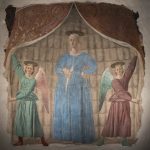
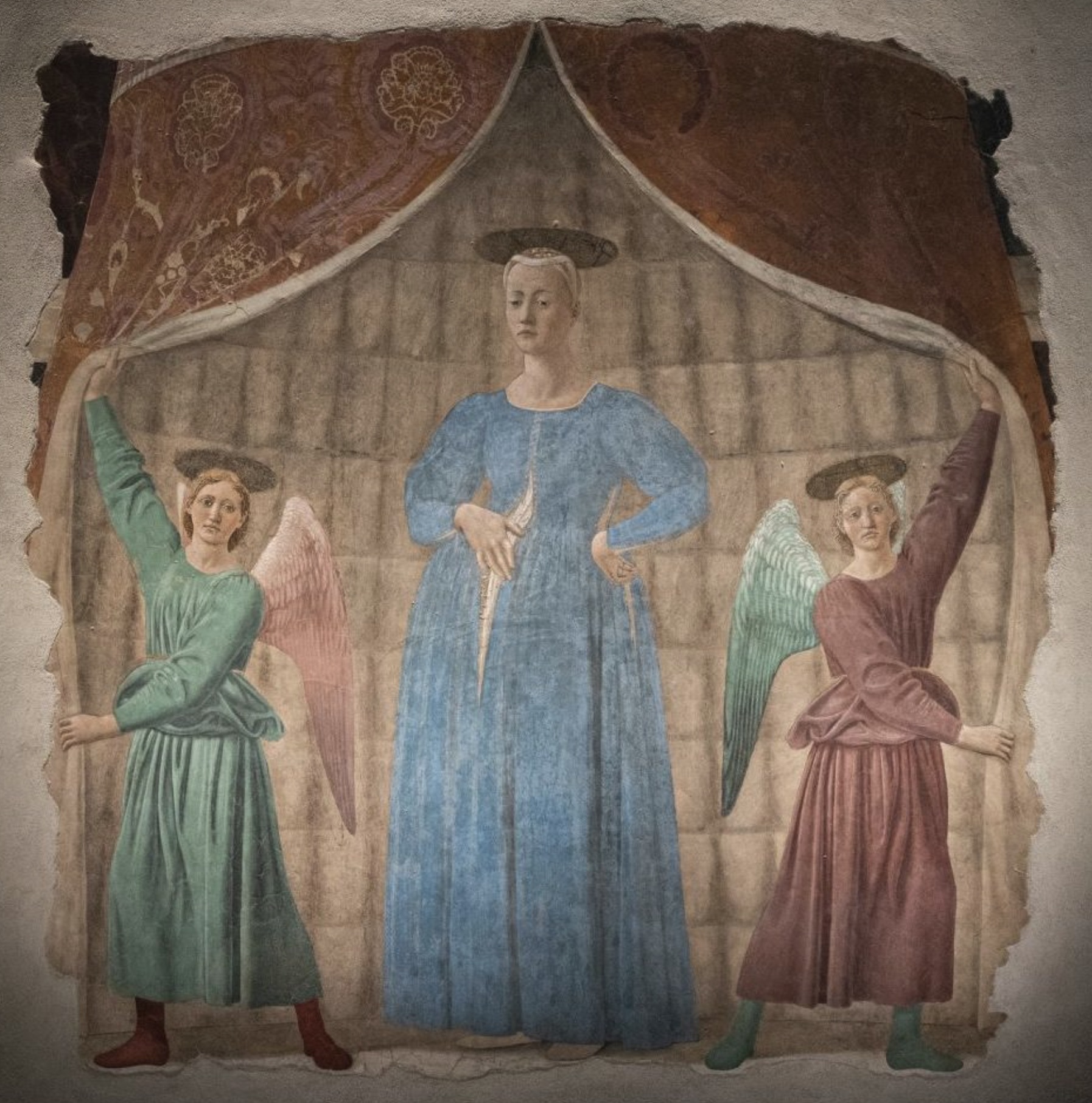
There is a fresco in Tuscany unlike any other. A pregnant Madonna, standing, looking downward with an expression that is hard to define — aware, solemn, deeply human.
It is the Madonna del Parto by Piero della Francesca, preserved in the small village of Monterchi, in the province of Arezzo. An artwork that centuries of history have not made any less mysterious, and that still leaves speechless anyone who encounters it for the first time.
If you want to see it in person, you’re in the right place. Here you’ll find an explanation of the work and you can purchase your ticket online for the museum in Monterchi that houses it.
Artsupp is the official platform for purchasing museum tickets. Here you can find the link to buy directly from the official ticket office of the museum.
Madonna del Parto: what it is and why it is unique
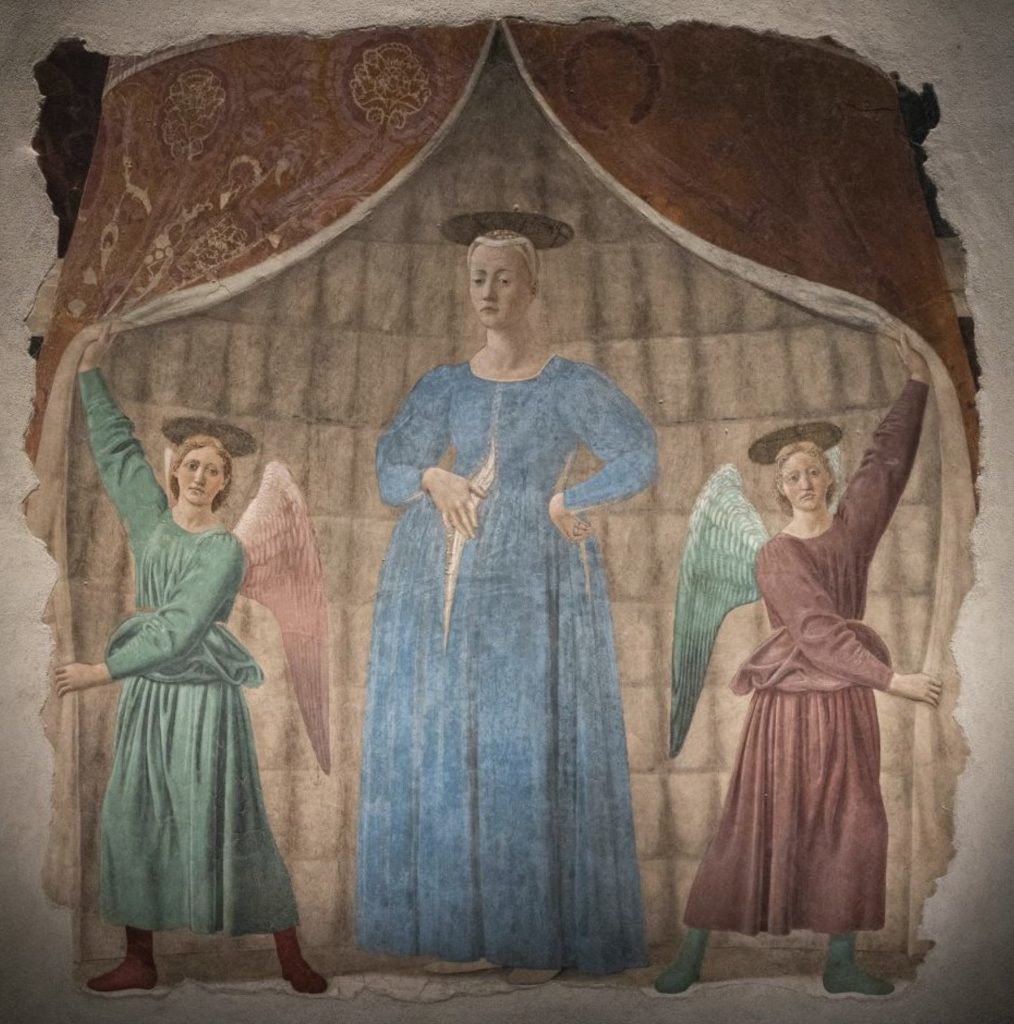
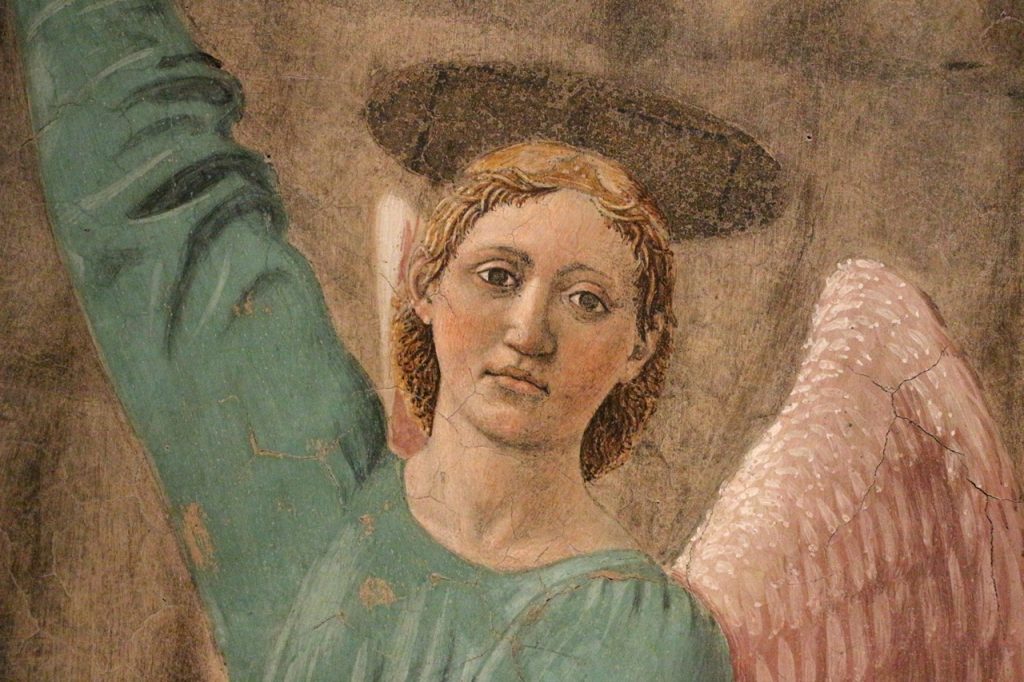
The Madonna del Parto is a fresco measuring approximately 200 × 200 cm, created between 1450 and 1465. It depicts the Virgin Mary in an advanced state of pregnancy, standing at the center of a canopy opened by two perfectly symmetrical angels.
Her hand resting on her belly, her downward gaze, and the composed stillness of the figure all contribute to creating an image that is extraordinarily rare in the history of art.
It is a unique image in Renaissance art: the representation of the pregnant Virgin is extremely uncommon in painting, and here Piero della Francesca transforms it into one of the absolute peaks of his artistic achievement.
The meaning of the work: the Madonna del Parto
The exceptional nature of the Madonna del Parto goes far beyond its unusual iconography. Piero della Francesca constructs the composition with perfect geometry: the canopy divides the space with mathematical precision, the two angels are nearly identical yet mirrored, and the figure of the Madonna occupies the center with a monumental presence that dominates the scene without ever feeling distant.
The original location of the fresco was not accidental. The Church of Santa Maria di Momentana, where Piero painted the work, stood on the slopes of the hill of Montione — a site historically associated with ancient pagan fertility cults.
The decision to depict the pregnant Virgin in that exact place has never been fully explained — and it is precisely this mystery that makes the work even more fascinating.
Even today, the patron who commissioned the fresco remains unknown. Who asked Piero to create this work? Tradition suggests that the artist dedicated it to his mother, who was from Monterchi, but no documents confirm this. A masterpiece wrapped in silence, much like its protagonist.
Where to find the Madonna del Parto and how to visit it
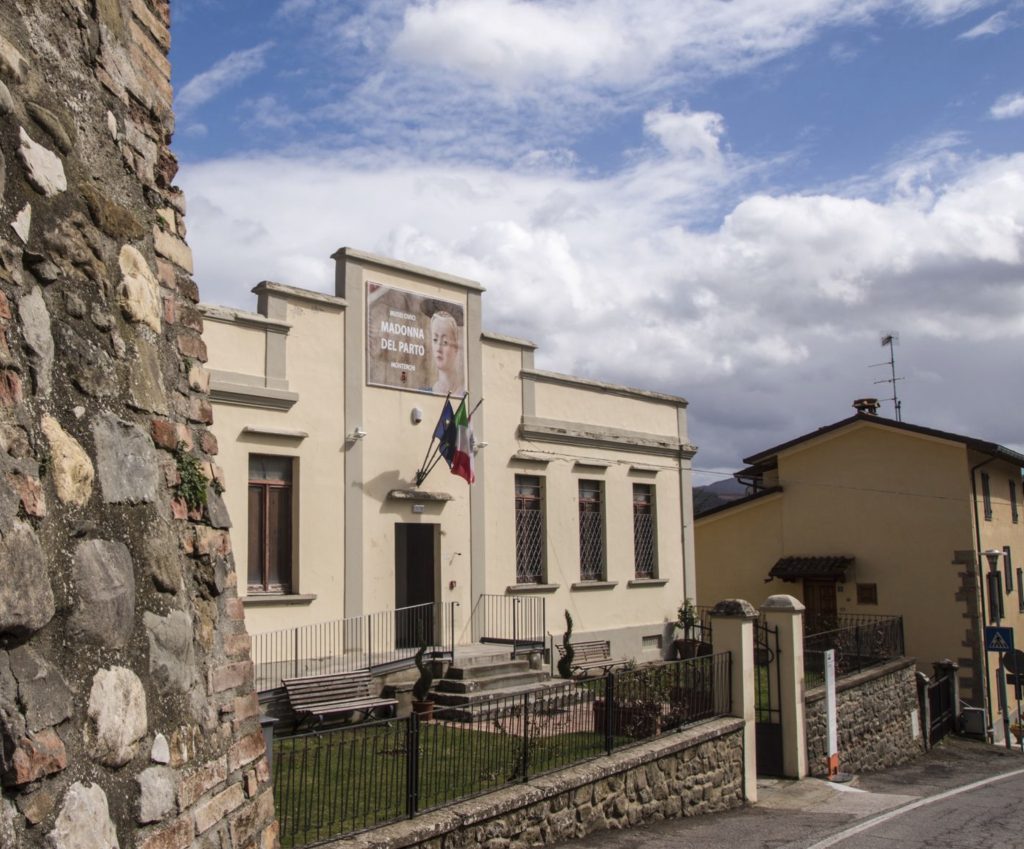
The Madonna del Parto is housed in the Musei Civici di Monterchi, a small museum entirely designed around this single masterpiece.
The visitor experience includes:
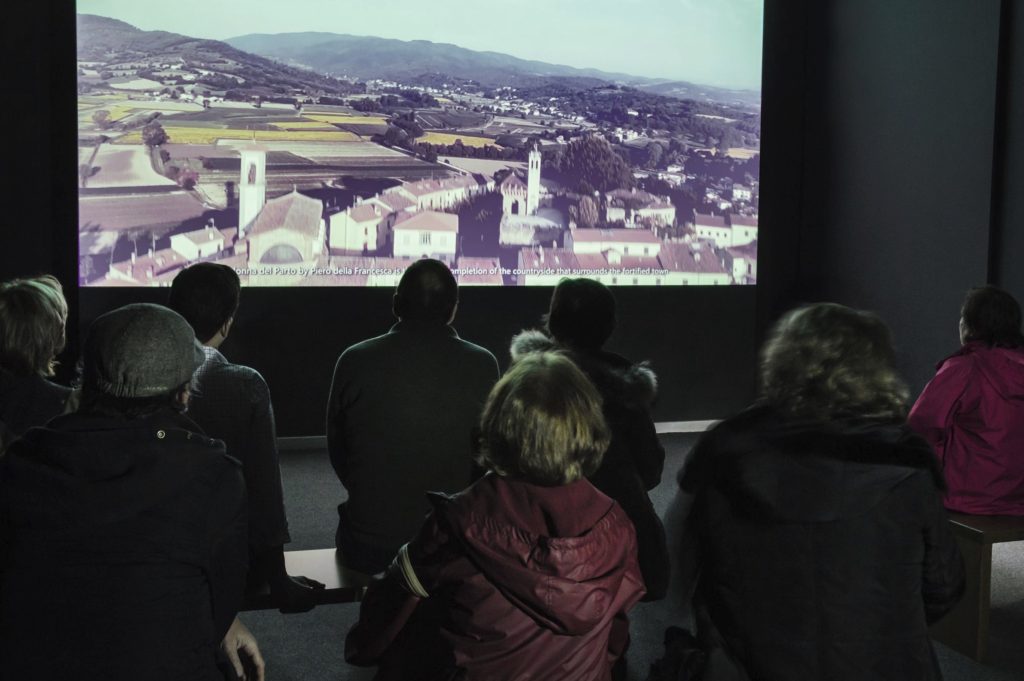
- An immersive video room that tells the story of Monterchi, its connection to Piero della Francesca, and technical insights into the fresco
- The main gallery, where the Madonna del Parto is displayed inside a protective case under optimal lighting conditions
- The Madonna del Latte, a small 14th-century fresco discovered beneath Piero’s work in 1911
- An internal bookshop
- A panoramic garden overlooking the countryside of Monterchi — one of the most beautiful viewpoints in the Valtiberina
📍 Address: Via della Reglia 1, 52035 Monterchi (AR)
Here you can book your ticket online in advance, especially for groups.
Who was Piero della Francesca
Piero della Francesca (Piero di Benedetto de’ Franceschi), known as Piero della Francesca, was born in Sansepolcro around 1412. He was a painter, mathematician, and theorist of perspective: in his work, art and science were inseparable. His painting is characterized by steady, diffused light, geometric volumes, and silent, impassive figures that seem inhabited by absolute calm.
He worked for some of the most important courts of the Italian Renaissance — the Medici in Florence, the Malatesta in Rimini, and the Montefeltro in Urbino — but he always returned to his homeland, the Tuscan Valtiberina, where most of his works are still concentrated today.
- Arezzo → Legend of the True Cross (Basilica of Basilica di San Francesco) and Magdalene (Cathedral)
- Monterchi → Madonna del Parto (Civic Museum)
- Sansepolcro → Resurrection, Polyptych of Mercy, and others (Civic Museum)
The Madonna del Parto is the only work by Piero della Francesca entirely dedicated to motherhood — and perhaps for this reason it is the one that moves visitors the most.
How to buy tickets
It is possible to purchase and book admission tickets for individuals or groups online via Artsupp, avoiding queues at the entrance.
Online booking is especially recommended for groups (15 people or more), for which advance reservation is strongly advised a few days before the visit.
A suggested itinerary: one day in the Land of Piero
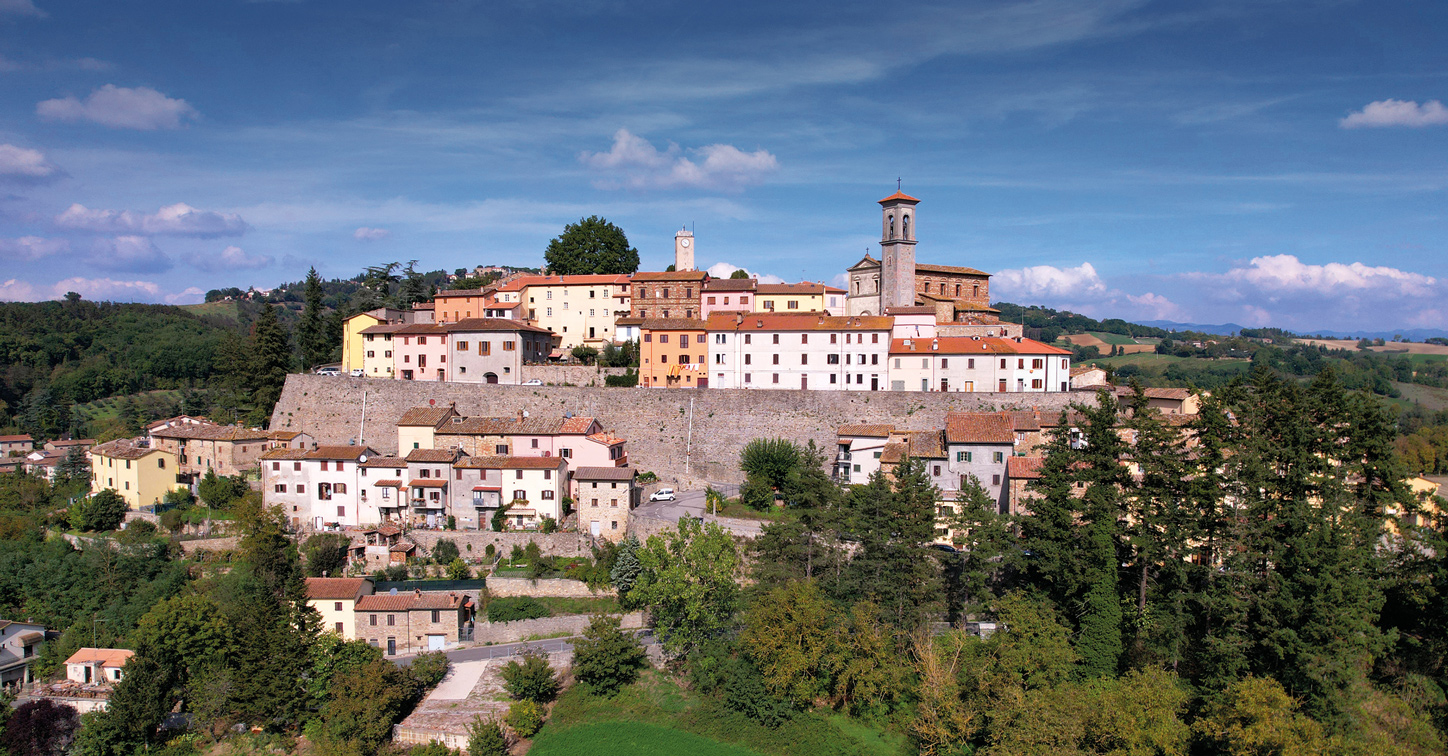
Monterchi can be visited in half a day and fits perfectly into a wider itinerary across the Valtiberina, following the traces of Piero della Francesca.
- Morning — Arezzo: Basilica of Basilica di San Francesco (Legend of the True Cross) and the Cathedral (Magdalene)
- Midday — Monterchi: Madonna del Parto + lunch in the village
- Afternoon — Sansepolcro: Civic Museum (Resurrection, Polyptych of Mercy)
In a single day, three of the most important sites of Italian Renaissance art — all less than an hour apart from one another.
How to get to Monterchi
Monterchi is located in the Tuscan Valtiberina, approximately:
2 hours from Siena (Siena–Bettolle highway, then SS326 and SS73
30 minutes from Arezzo (SS73 towards Sansepolcro, Monterchi exit)
45 minutes from Perugia (E45 northbound, Città di Castello exit, then SS221
2 hours from Florence (A1 to Valdarno, then SS69 and SS73)
Is it worth coming to Monterchi just for this?
Yes. The Madonna del Parto is one of those works that cannot truly be understood until seen in person. Photographs do not convey its scale, its light, or the atmosphere of silence in the room.
Visitors are often surprised: they expect something distant and purely sacred in a formal sense, but instead they encounter an image of extraordinary humanity.
It is the image of a woman who is waiting. And Piero della Francesca, with all his geometry and science, manages to turn this moment into something universal.