At the Mucciaccia Gallery in Rome, from January 31 to March 1, 2025, the exhibition of Belgian artist Jan Fabre titled Songs of the Canaries, Songs of the Gypsies.
Born in 1958, Fabre is undoubtedly one of the greatest innovators of the contemporary scene in both art and theater. We had the opportunity to meet and interview him.
Here’s what Jan Fabre told us.
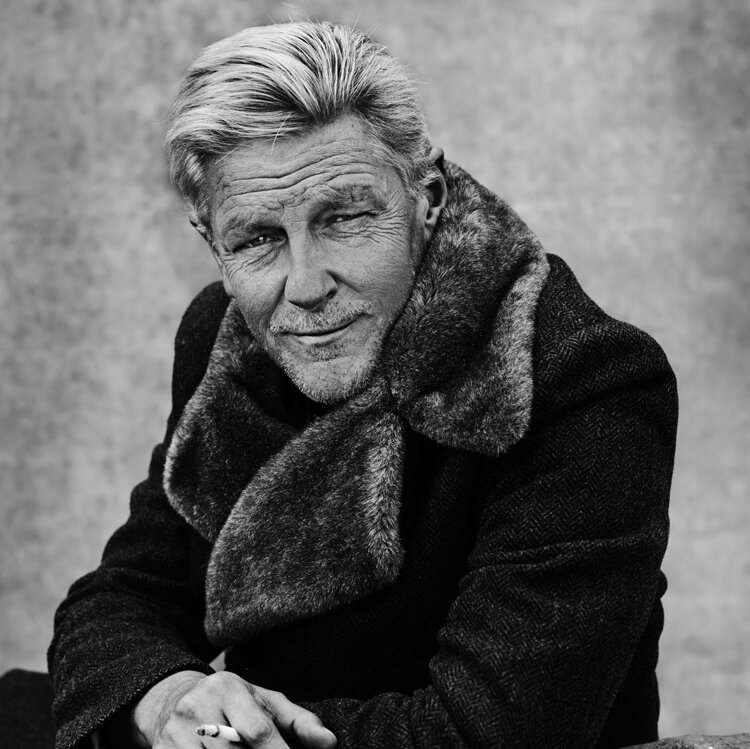
A: We know that you often bring many of your personal experiences into your exhibitions. Even in this one, there are several references to your personal sphere. For example, in the first part of the exhibition, titled Songs of the Canaries, the main tributes are to your brother Emiel and to Robert Stroud, the “Birdman of Alcatraz,” a prisoner who became an entomologist and canary expert during his time in prison. In the second part, Song of Gypsies, your son is featured alongside the music of Django Reinhardt, the famous Belgian jazz musician. Do you believe this is the exhibition that reflects your personal sphere the most?
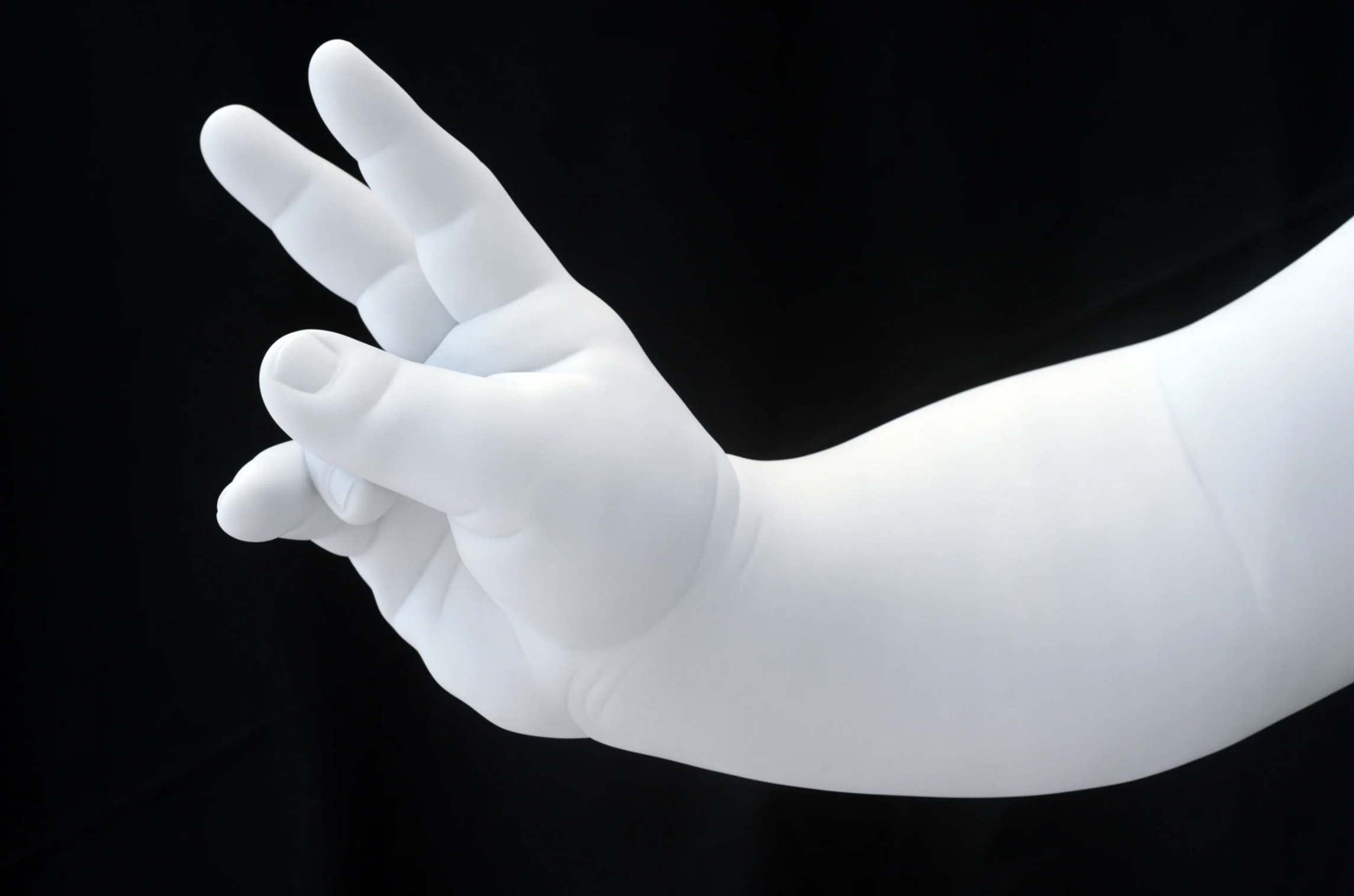
JF: Yes, the exhibition is divided into two parts. There is my son, Django Gennaro Fabre, who is now 3 years old, but when I created the sculptures that represent him, he was 5 and a half months old. I worked on those sculptures for two and a half years and, thanks to my son, I learned the difference between intelligence and consciousness. His name, Django, is inspired by the great jazz musician Django Reinhardt, of whom my father was a big fan.
A: Staying on the music theme, this is certainly an important part of your work and artistic process. Can you give us some advice? Who are the musicians or what genre do you appreciate the most?
JF: First of all, I have always been a great admirer of the Beatles, especially when I was younger; then David Bowie in his golden days, although I still listen to his albums today, and then, Jim Morrison. They are definitely my favorites.
A: Moving on to art, we have read about Rubens, Van Eyck, Bosch, and Rops, who perhaps resonate with you particularly due to a commonality of themes, one of which is death. But if you had to choose today, which contemporary artists do you like? Can you suggest some relevant names in contemporary art that, in your opinion, could create interesting work in the near future?
JF: I am like a dwarf born in a land of giants. I mean, Rubens is a genius: when you look at his works, at the technique and the symbols he uses, not to mention the light. Even today, when I paint, I look to and draw inspiration from the light in Rubens. I still take inspiration from Bosch and Van Eyck. They are my greatest masters. As for contemporary artists, I have some fantastic colleagues in Belgium; although we work in very different ways, I really like Thierry De Cordier, Berlinde De Bruyckere, Michaël Borremans, for example.
A: She is the only living artist to have been exhibited in museums of the caliber of the Louvre in Paris or the Hermitage in St. Petersburg. If she had to think of another museum where she would like to exhibit, which one would it be? Does she have a favorite?
JF: There is this museum that truly impressed me when I was younger, the Cairo Museum in Egypt. I believe my art can blend well with the Cairo Museum, for example, when you observe the ancient frescoes, many of which speak of transcendence: everything in that art revolves around vibrations and energy. Additionally, I am passionate about entomology, I collect scarabs, and the scarab was a fundamental symbol in Egyptian sculpture. It would be a dream for me to create a dialogue between that museum and my works.
A: In your art, somehow the body always returns in all its declinations. In this case, on display is the brain. Why did you choose this organ, is it connected to the energy you mentioned earlier?
JF: The brain is the most important part of the human body. When there is no imagination, there is no knowledge. The canary, on the other hand, acts as an observer and explorer; it was no coincidence that it was used by miners in Belgium to descend into the mines. If the canary fainted, it was a sign of a lack of oxygen, and the miners knew they had to ascend to the surface.
A: You have often emphasized how fundamental the concept of beauty is in your art, a beauty that in various interviews you have described as a butterfly. If you touch it, there is a risk of breaking it. Could you elaborate on this?
JF: Yes, I have often used this metaphor. Beauty is like a butterfly; if you touch it, it breaks. It’s a bit like thinking about intelligence and consciousness. We live in the age of artificial intelligence and information, but in this way, we lack consciousness, and it is consciousness that gives us value, makes us sensitive, jealous, and alive.
On Artsupp you will find the city's full calendar with opening hours and tickets.
Explore Rome