December has arrived, bringing with it the five best exhibitions to visit, many of which will continue until spring.
Giovanni Boldini and the Myth of the Belle Époque at Palazzo Mazzetti in Asti until April 10, 2023
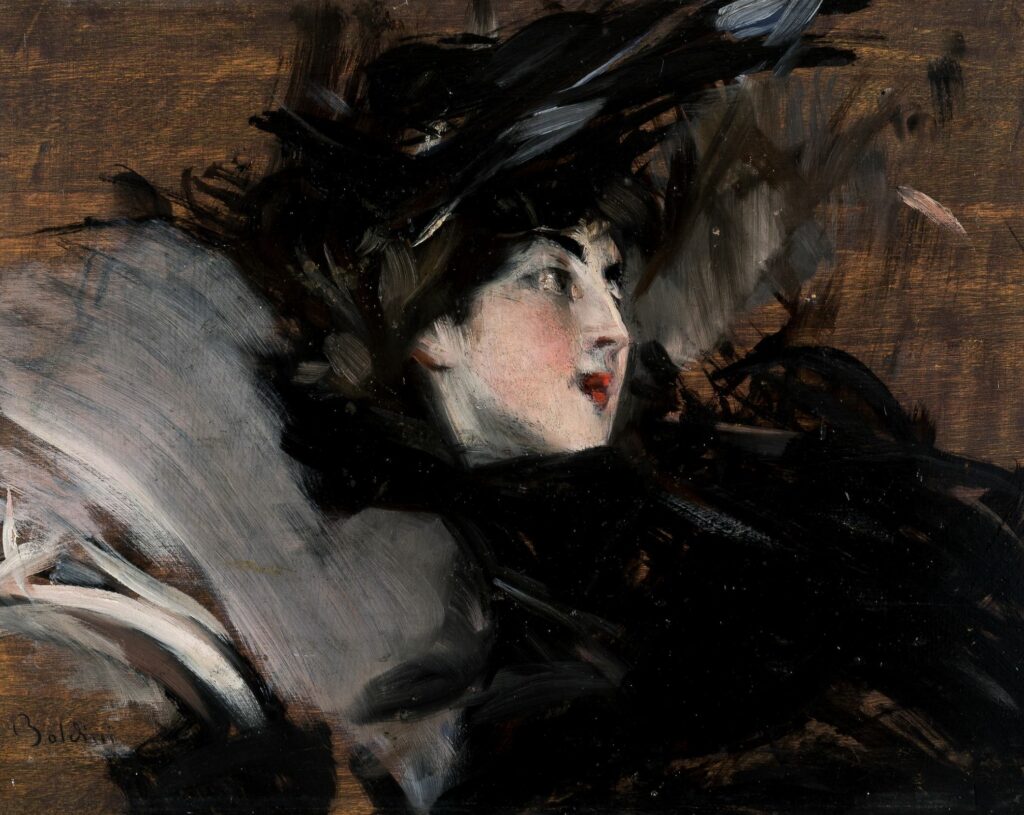
Among the exhibitions of 2023, until April 10, 2023 Giovanni Boldini is celebrated with a major exhibition Giovanni Boldini and the Myth of the Belle Époque at Palazzo Mazzetti in Asti.
The exhibition celebrates The Belle Époque, an extraordinary historical period steeped in literature and fashion, music and luxury, art and bistros. The salons, the noblewomen, and fashion: it is the overwhelming world of Giovanni Boldini, a genius of painting who more than anyone else was able to capture the rarefied atmospheres of an extraordinary era.
The exhibition features 80 magnificent works – including Blonde Lady in Evening Dress, The Lady in Pink, Bust of a Young Reclining Woman, and The Voile Blouse. The selected works best express Boldini’s style, his ability to exalt feminine beauty and reveal the most intimate and mysterious soul of the noble protagonists of the era.
Boldini is known for capturing the so-called fleeting moment, that unique instant when a more sincere glance revealed the state of mind and the body language became more expressive, the moment in transition between one action and another, when the driving force of a gesture was exhausted, promptly regenerating in the next.
Giulio Romano the Force of Things at Palazzo Te in Mantua until January 8, 2023
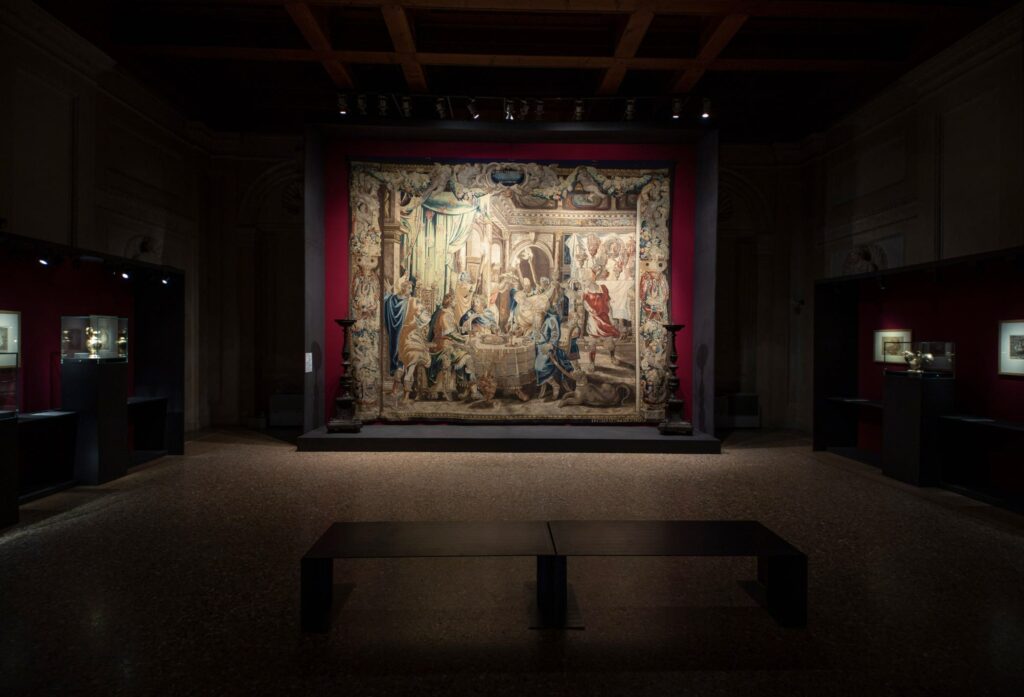
Giulio Romano. The Force of Things is at Palazzo Te until January 8, 2023.
The exhibition reveals the prodigious design talent of the artist who greatly contributed to creating the image of the Gonzaga, bringing back into the rooms of “his” Palace the extraordinary objects conceived to contribute to the creation of the “lifestyle” of the Renaissance court of the lords of Mantua.
Giulio Romano. The Force of Things celebrates the genius of the artist and his creative energy evident even as a designer of high-representation objects: natural elements, weapons, vases, jugs, plates, and even salt shakers and knives.
Made from precious materials and decorated with forms that integrated classical motifs, they were expressions of the refined taste of the Mantuan court and played a decisive role in shaping an image of absolute splendor in competition with the great European courts. In this sense, the inexhaustible imagination of Giulio Romano played a crucial role in transforming Mantua into a stronghold of sixteenth-century design.
Roberto Ferri at Palazzo Pallavicini until March 12, 2023
Roberto Ferri is on display at Palazzo Pallavicini, in Bologna, from October 20, 2022, until March 12, 2023.
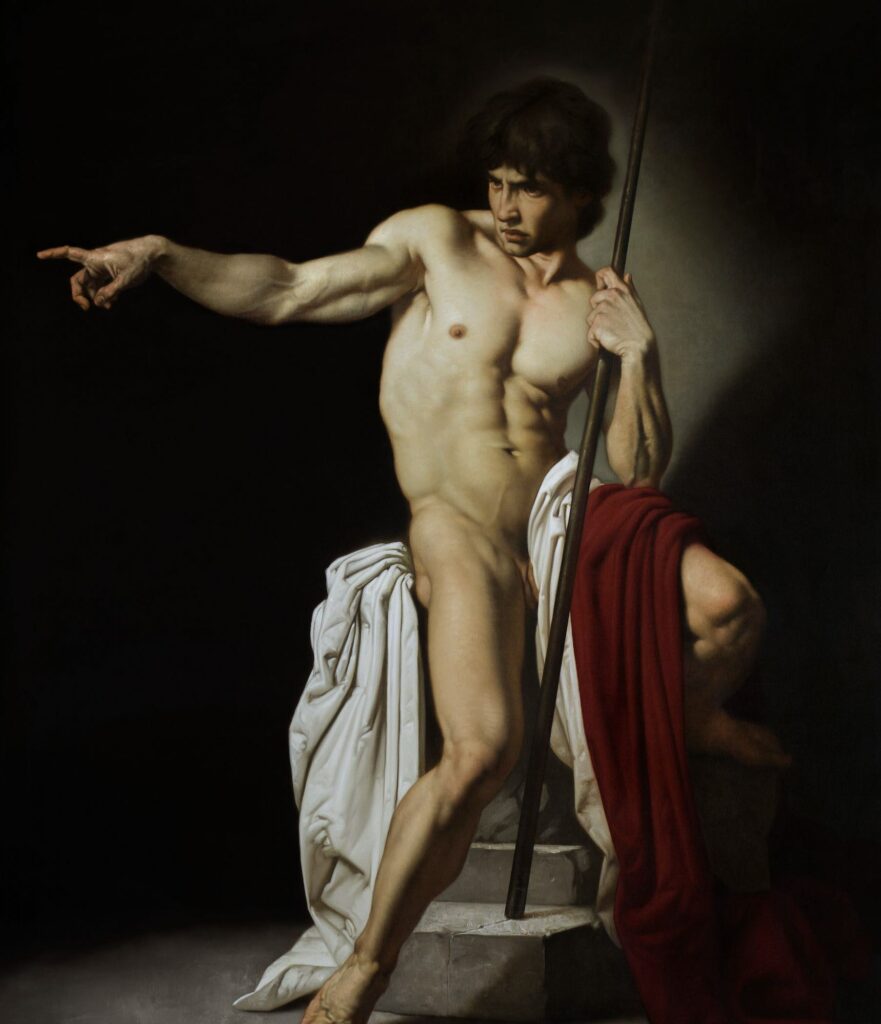
The exhibition of Roberto Ferri in Bologna enchants visitors with the masterpieces of the artist, the leading exponent of a refined art directly inspired by the works of Caravaggio.
The Roberto Ferri exhibition at Palazzo Pallavicini offers an anthology path between the sacred and the profane, highlighting the tireless and meticulous work of the Taranto master, devoted to realism and symbolism.
Among the exhibited paintings, sixty in total, there are splendid allegories of human impulses and sacred transpositions of the tensions of the spirit: once again, Ferri highlights the deepest truths of the human soul and its continuous and uninterrupted search for meaning through the sensuality and plasticity of the body.
Wonder emanates from large-scale works such as “The Broken Delights,” an elaborate staging of an inner conflict, or “Love, Death, and Dream,” a personified investigation of the extremes that govern the threads of life. The intense relationship of Roberto Ferri with graphic art is well represented by the exhibited drawings, characterized by an exquisite formal structure imbued with delicate lyricism. Between shadow and silence, the figures seem to propose a silent and rhythmic dialogue, whose internal pulse seems to echo the most ancient vital rhythm of man: the cornerstone of Roberto Ferri’s research reveals itself to be life, in all its infinite and most mysterious shades.
In the Time of Canova: An Umbrian Itinerary at Palazzo Baldeschi until January 8, 2023
In the Time of Canova, an Umbrian Itinerary is on exhibition at Palazzo Baldeschi, in Perugia.
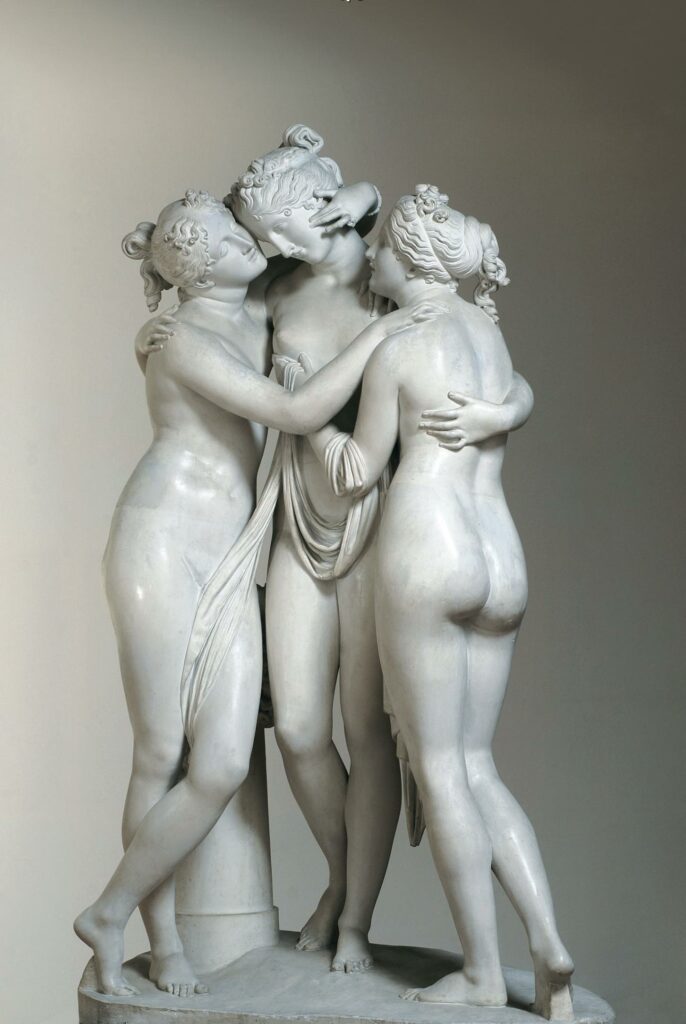
In conjunction with the bicentennial of the death of Antonio Canova, which occurred on October 13, 1822, Perugia pays tribute to the master with an exhibition-itinerary that unfolds between Palazzo Baldeschi and the MUSA, Museum of the Academy of Fine Arts. With “In the Time of Canova. An Umbrian Itinerary,” Umbria celebrates Canova and organizes the exhibition path in two venues, both in the historic city center.
The exhibition In the Time of Canova. An Umbrian Itinerary focuses on the core of Canova’s plaster casts preserved at MUSA, the museum of the Academy of Perugia – among which The Three Graces, donated by the sculptor himself in 1822 – and enhances the artistic and cultural context in which these works were inserted, narrating an Umbria inscribed in broader dynamics and a vibrant network of relationships.
The exhibition is conceived as a journey through time, with over one hundred works that will tell the story of “the sister arts,” namely sculpture, architecture, and painting.
The itinerary of the exhibition – both real and ideal – will thus have small and large “stopping points” around works and protagonists of a season culminated in the particularly influential relationship that Canova had between 1812 and 1822 with the Academy of Fine Arts of Perugia, which he guided in its choices, supporting the appointment of directors such as Carlo Labruzzi, Tommaso Minardi, and Giovanni Sanguinetti.
Habitat: The Forms and Ways of Nature at the Cassa di Risparmio di Jesi until April 11, 2023
“Habitat: The Forms and Ways of Nature” is on display at Palazzo Bisaccioni in Jesi, where nature is the undisputed protagonist: a nature explored in its aesthetic and social aspects by great artists of the 20th and early 21st centuries, who have portrayed its strength and beauty and have witnessed the evolving perception that society has had and continues to have of it.
The exhibition presents around forty works, all from the Intesa Sanpaolo Collection, by great masters of the 20th century – Balla, Piero Marussig, Pablo Picasso – and of the early new century, each of whom has worked on the theme of nature, providing a personal interpretation inextricably linked to the artist’s context of belonging.
“Habitat: The Forms and Ways of Nature” curated by Stefano Verri, promoted by the Fondazione Cassa di Risparmio di Jesi with the coordination of Mauro Tarantino, in collaboration with Intesa Sanpaolo and sponsored by the Ministry of Culture and the Marche Region, addresses the multifaceted theme of the environment in relation to man, in the creation and definition of the habitat in which we live.