The Blue Widow by Pascali is one of the artworks of the Apulian artist captured by Claudio Abate and on display until June 4th atMaxxi in Rome, as part of the exhibitionClaudio Abate Sensitive Surface.
Pino Pascali
Pino Pascali was born in Bari in 1935.
In 1956 he moved to Rome, which would become his adopted city where he joined the artists’ circle around the Galleria l’Attico.
Eclectic and multifaceted artist, Pascali is now considered one of the main representatives of arte povera, alongside Boetti, Pistoletto, Kounellis, Merz, Mattiacci, Tacchi.
He died prematurely after a motorcycle accident in 1968, at the height of his career.
Pascali and autobiographical art
Understanding the artistic research of Pascali is crucial to grasp his autobiographical side.
He moved to Albania with his family due to his father’s job as a policeman. There, he gained insight into the realities of war. Later, with the series “arms”, war became a recurring theme, albeit without political connotations.
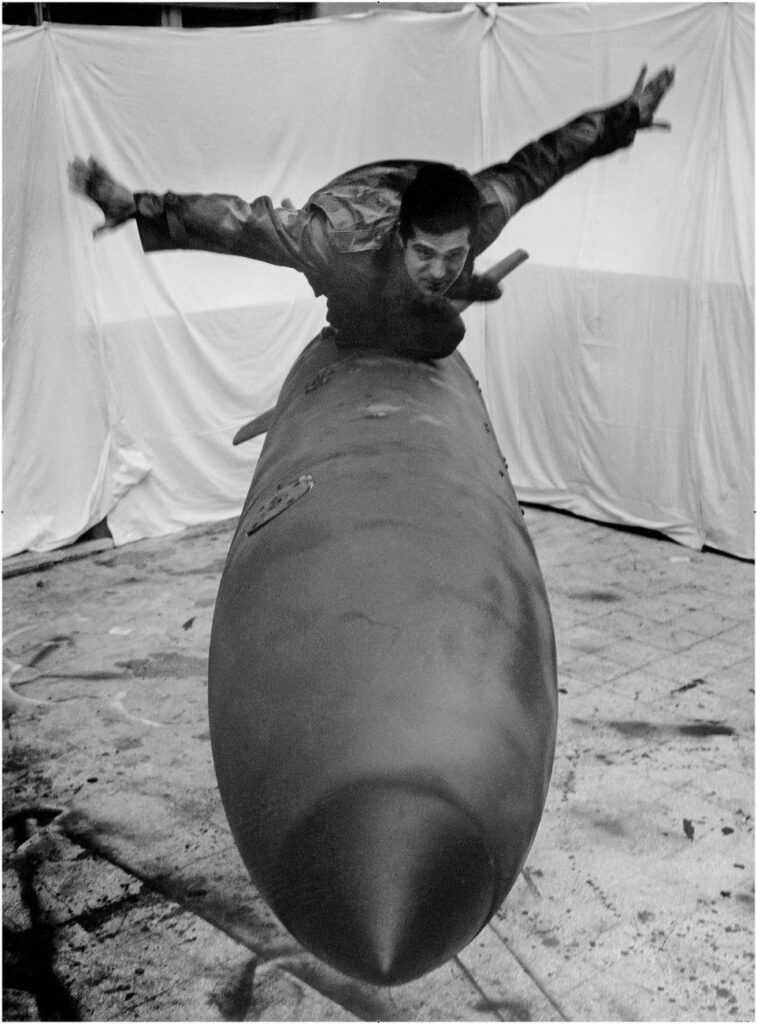
Pascali presents arms only as a reminder of the games of his childhood, the art itself becomes a weapon for the whole world, as Picasso used to say.
Pascali’s artworks become a tool for reflection on what is art and what is not, building relationships, remembering, and rewriting history.
Blue Widow: Pascali and the reconstruction of nature.
Pascali created the Blue Widow in 1965.
It is a large spider.
It is a strange, unreal, and fantastic creature. It belongs to Pascali’s last unfinished series titled “Nature Reconstruction”, where the artist focuses on the interplay between industrial materials and organic forms.
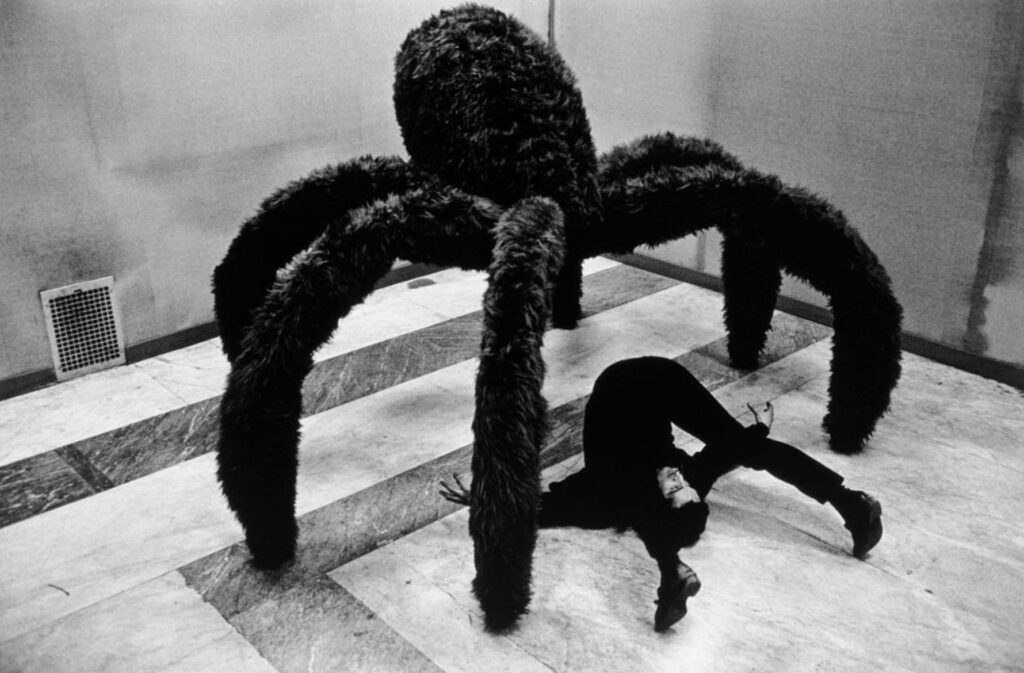
In the “Reconstruction of Nature”, Pascali employs industrially produced materials, such as nylon, steel wool, or acrylic fur, to create other worlds and creatures.
To create his Blue Widow, Pascali chose a synthetic material and ironizes the monumentality and “untouchable” nature of classical artworks, transforming it into the realm of playfulness and interactivity.