Let’s Get to Know Claudio’s Work Better
In Trentino, at the Museo Alto Garda, in the year dedicated to the preservation of glaciers, photography becomes a memory of time and human limits through the shots of Claudio Orlandi: from November 29 to June 14, an exhibition that tells the moment when the mountain dissolves.
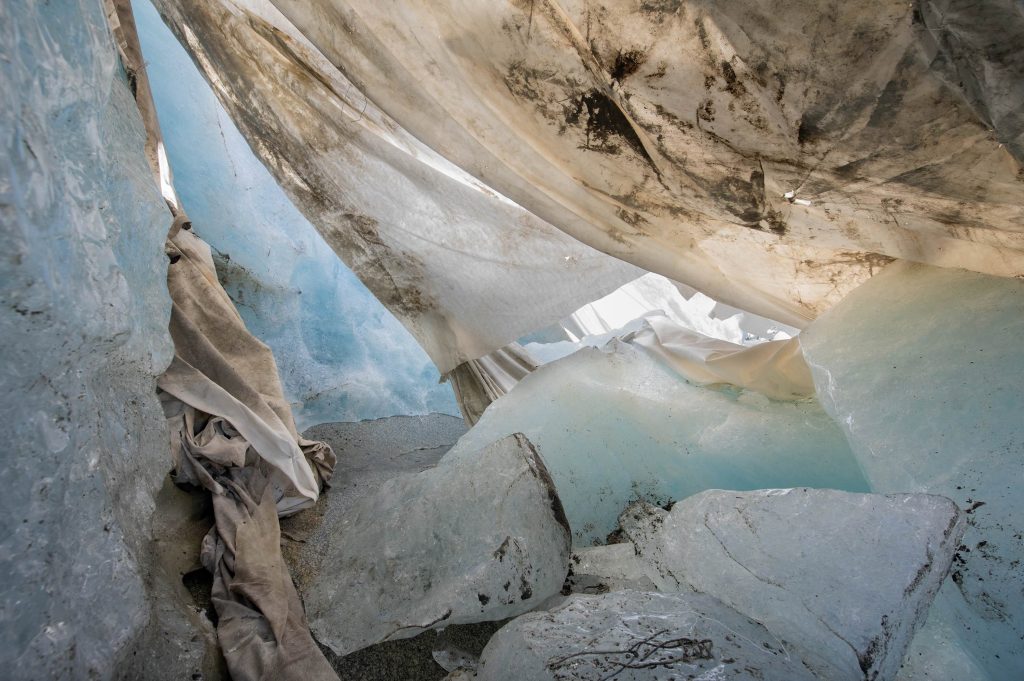
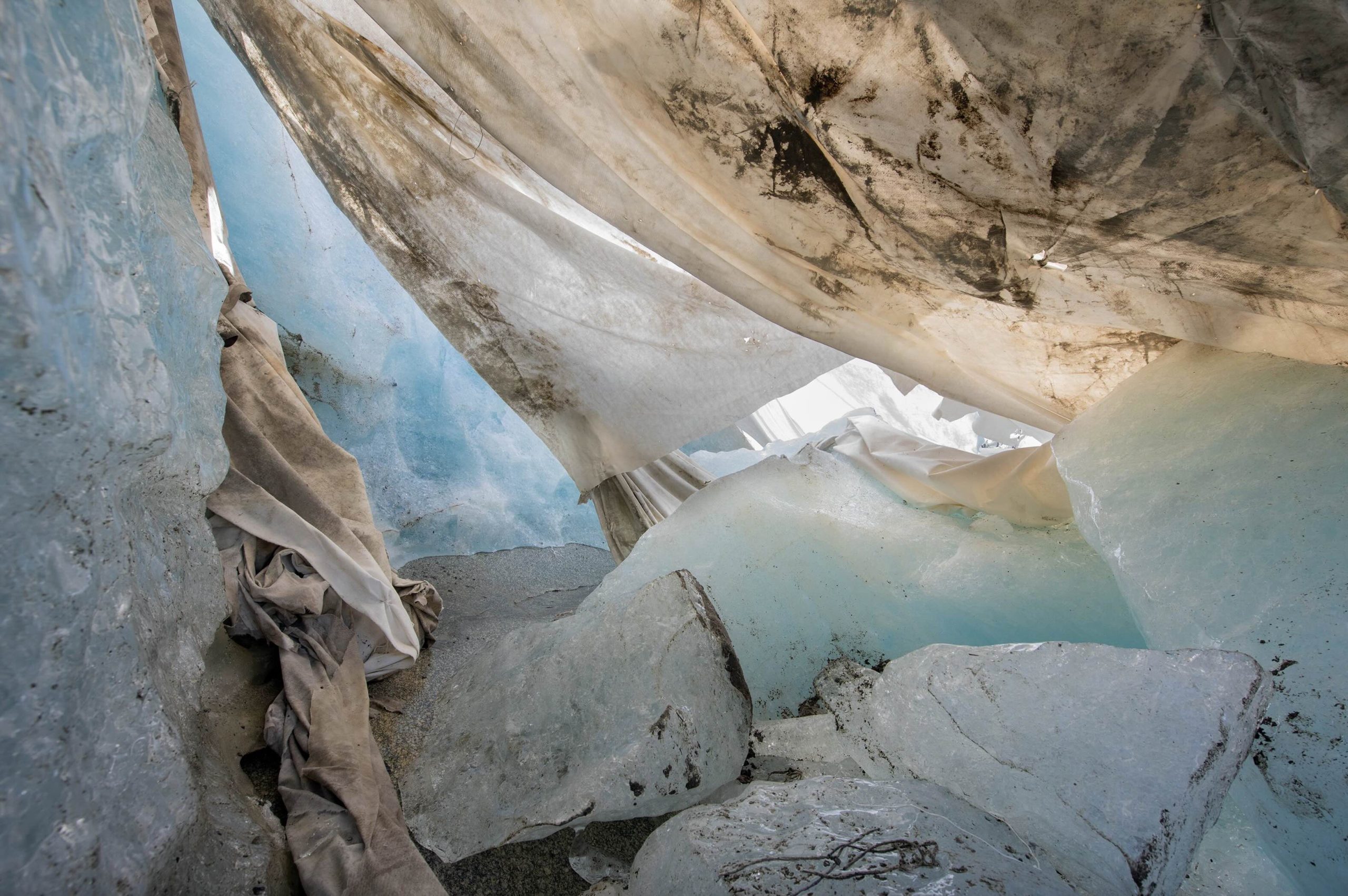
After seventeen years of research among the peaks and wounds of the alpine landscape, Claudio Orlandi brings to the Museo Alto Garda di Riva del Garda the complete corpus of Ultimate Landscapes, an art photography project that investigates the metamorphosis of glaciers in a time of climate crisis. A visual narrative that traverses the Alps from Presena to Marmolada, transforming the signs of man, the geotextile sheets laid to protect the ice, into symbols of an ambivalent gesture, suspended between care and obsession, between defense and illusion.
Born and raised in Rome, what inspires your work and study of nature?
I am a somewhat atypical Roman, as I have always been attracted to the mountains. My parents took me to Val di Fiemme, and I really liked the mountains even though I still live by the sea today. My love for the mountains then transformed into a more specific love for glaciers: ice is an element that creates, reflecting the concept of creation, just like marble.
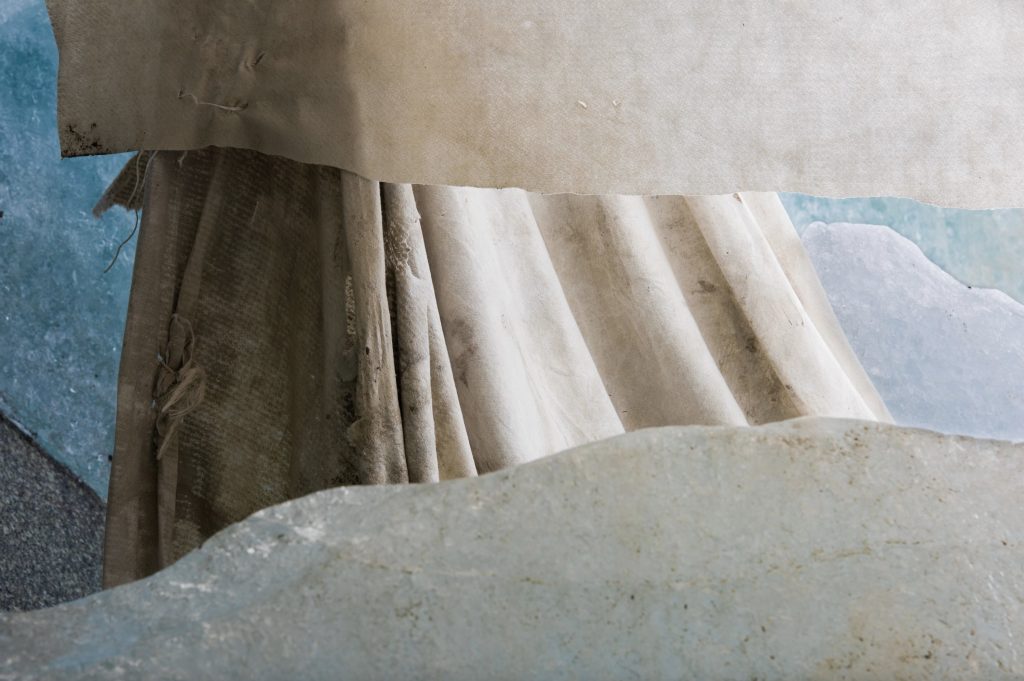
Subsequently, from love/passion it evolved into work; in fact, in 2008, an experiment began on the Presena glacier to anchor the first geotextile sheets. At that time, they did not yet know how to anchor the sheets, and I, having gone to observe out of curiosity, began to document. Thus, my work was born. Initially, I thought it would end with the first shots on Presena, but then I started to travel and explore. I went to Garmisch-Partenkirchen, the highest peak in Germany, and then traveled most of the Alps, concluding this year.
I do not consider myself an artist or even a photographer; I am a sculptor of two-dimensional images. I am not a photojournalist because I see myself as more introspective with artistic aims and purposes. I capture the folds of fabrics, the play of light and shadows; it is a narrative for the images expressed through art.
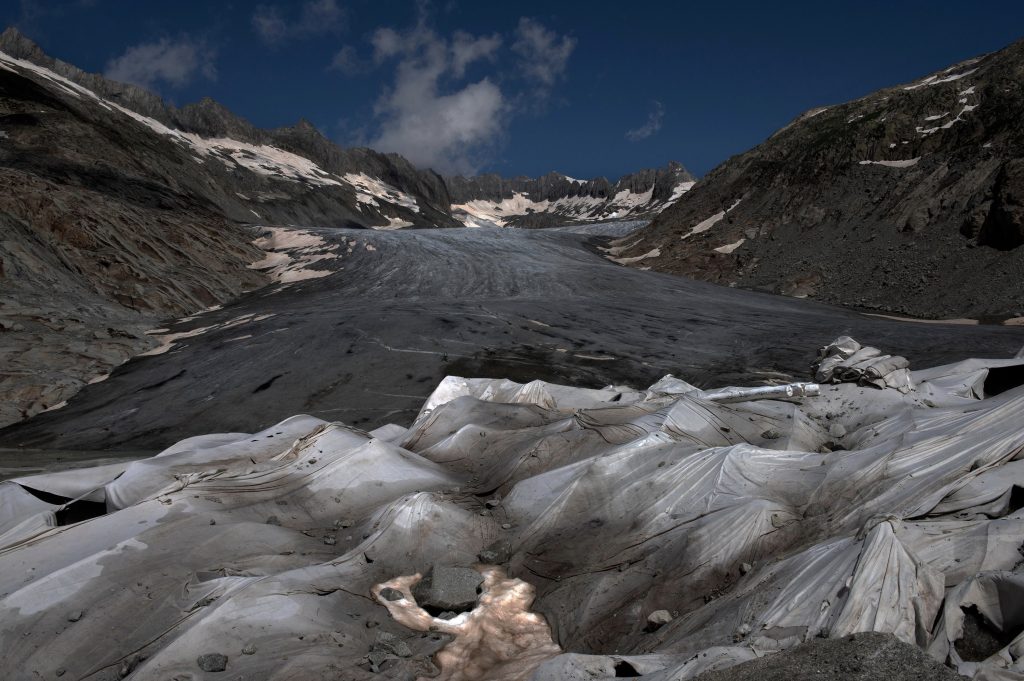
Your photographic language moves from a figurative restitution of reality to essential pictorial abstraction constructed in clear planes and schematic surfaces, giving value to what Plato indicated regarding geometry, aimed at the knowledge of the eternal. In this regard, in the series of your shots Ultimate Landscape, we see how the changing landscape and the resizing of glaciers are at the center of the debate. In this case, how is the theme of “the eternal” valued?
I remember that the Casa della Memoria in Milan organized an exhibition on the theme of glaciers in 2021, where a renowned glaciologist, Claudio Smiraglia, also spoke, giving us a terrifying piece of news: despite the timelines having been extended, it was initially said that by 2035 there would be no more ice in the Alps, but now we are talking about 2100. For me, having created this work means having collected a fairly in-depth documentation that in the future those who follow us will be able to tell something about what has been. So for me, the eternal in this case is represented by the memory of what has been, what is, and what will be.
The subtitle of the exhibition The Illusion of Ice clearly conveys the state of emergency in which our glaciers find themselves and how this emergency is becoming increasingly important. What kind of feelings have you experienced over the years (from 2008 to today) seeing the landscape transform?
In general, I have always felt a great emotion, negative of course, because it is incredible to see how the landscape changes over just a few years. The Presena Glacier is the one I have frequented the most; I have been to the Stelvio twice, but the Rhône has been the most emblematic for me: the first time in 2020 and the second in 2024. In just 4 years, the loss of volume has been enormous; where there was once a small lake, now there is a large lake. It was a great emotion there.
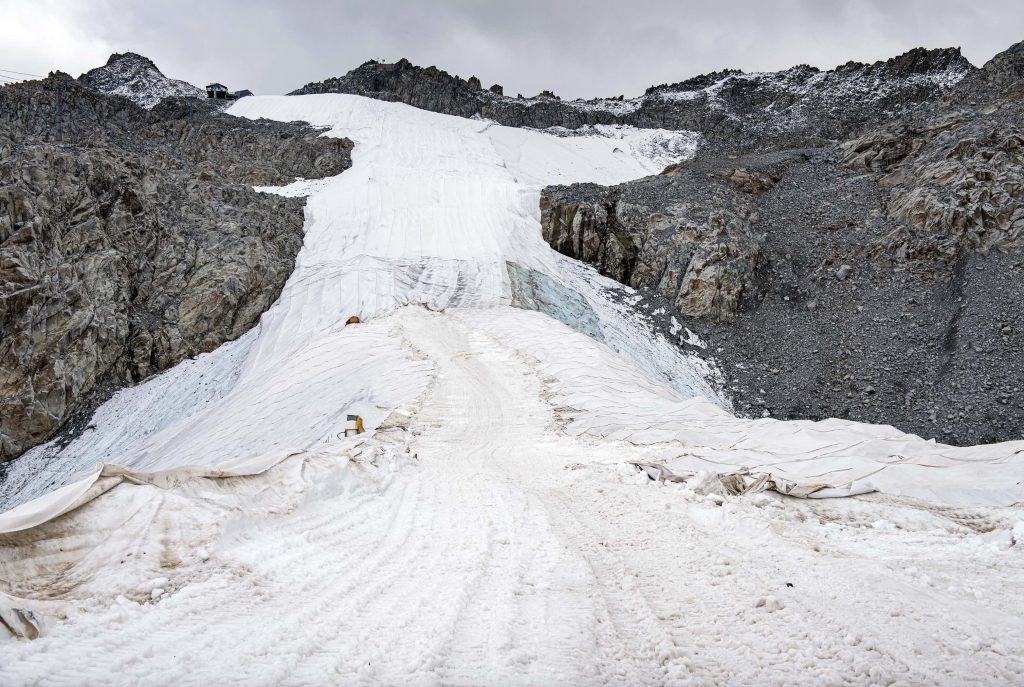
On the occasion of the exhibition, thanks to the collaboration of designer Alessio Mosti, it will be possible to admire his shots with the “voice” of the glacier itself, a physical sound of the cracking recorded and repeated. We can define the sound almost as a cry for help, a call for rescue, from the mountain, and from the museum a way to raise public awareness to adopt more responsible choices in daily life. Would you like to leave a message to the readers of artsupp?
First of all, Alessio Mosti is a sound designer who has sampled not only the sound of cracking ice but also the noises from marble quarries, and he is very talented; he combines the sounds of natural samples with his own. When the museum indicated it wanted to merge the sounds with the shots, I suggested Alessio, with whom I had already collaborated on a project in Noto.
In the exhibition, there will be the sound “Catabasis,” but there will also be “Unveil” with the sound of cracking and the noise of ice.
My personal message? It should certainly be left to those who govern us; we can do very little, but our actions in daily life can be conscious and have an influence.