Exhibitions You Can’t Miss in 2026 Across Italy!
The unmissable exhibitions of 2026, we recommend them to you!
After the great successes of 2025, a year that concluded with a remarkable turnout for Italian museums, here are the exhibitions not to be missed to give the right start to 2026.
Here you will find a brief selection of the unmissable exhibitions of 2026 that, in our opinion, deserve a visit but for all the others, there’s always Artsupp.
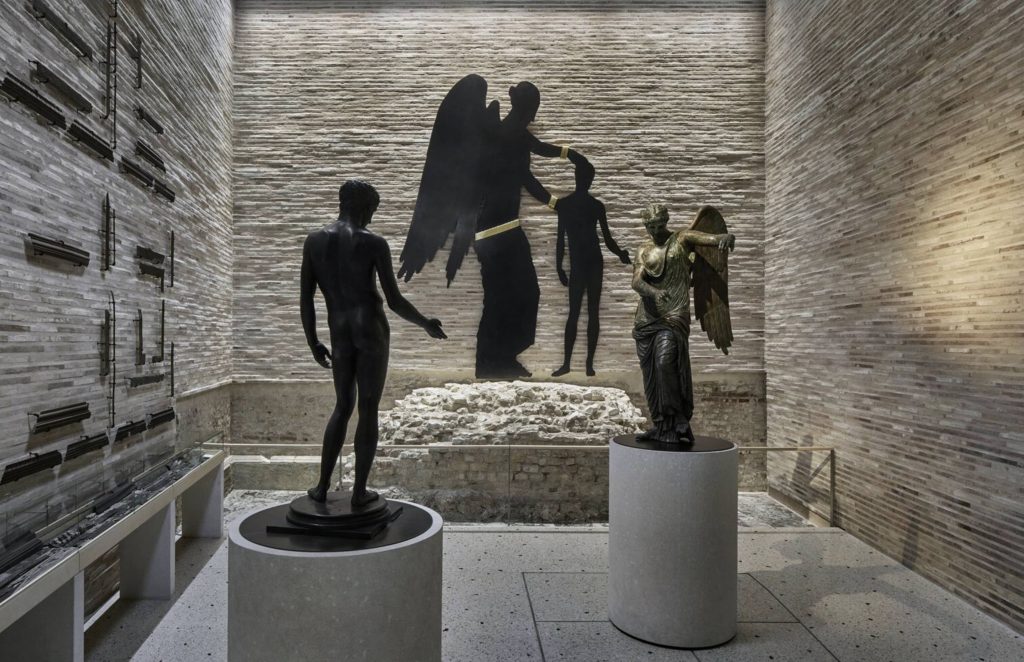
Victoria Mater: The Idol and the Icon until April 12 in Brescia
The installation, titled Victoria Mater. The Idol and the Icon, scheduled at the Archaeological Park of Roman Brescia, inside the Capitolium, from December 4, 2025, to April 12, 2026, goes in this direction, proposing a dialectical comparison between two bronzes of extraordinary beauty and elegance.
Ancient sculpture continues to amaze. The eye of the contemporary scholar, refined by research conducted over the centuries, is increasingly ready to provide a historical and critical reading of the sculptural artifacts created in the Greek-Hellenistic context and their natural Roman translation, which knows how to unite in a close dialogue archaeology, art history, and social and cultural aspects.
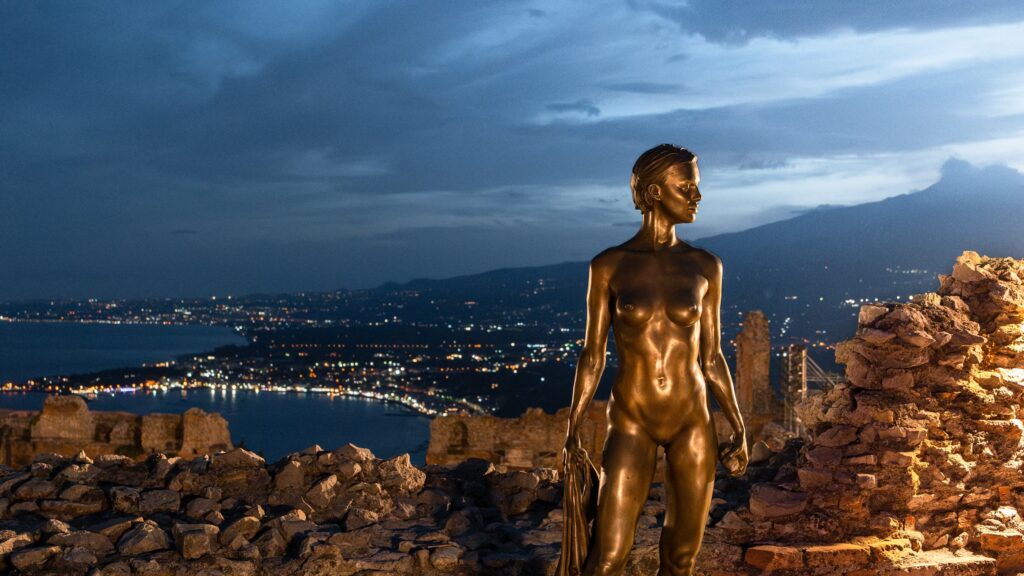
SCULPTED GESTURES by JAGO until May 3, 2026, at the Ancient Theatre of Taormina
The exhibition, open to the public from September 4 to May 3, 2026, puts four works by Jago in dialogue — Animal Imprint (2012), Memory (2015), Prison (2016), and David (2024, bronze) — in a context like Taormina, a crossroads of civilizations and a theater of ancient memories. Jago’s works are inserted as sculpted gestures in time, witnesses of a continuous expressive necessity that crosses epochs and languages.
The first three sculptures, carved in statuary marble, revolve around the theme of the hand: a symbol of contact, creation, personal affirmation. It is through the hand that the human being leaves a mark, sinks into matter, builds memory. Not just a tool, but a self-portrait: a living presence that traverses time.
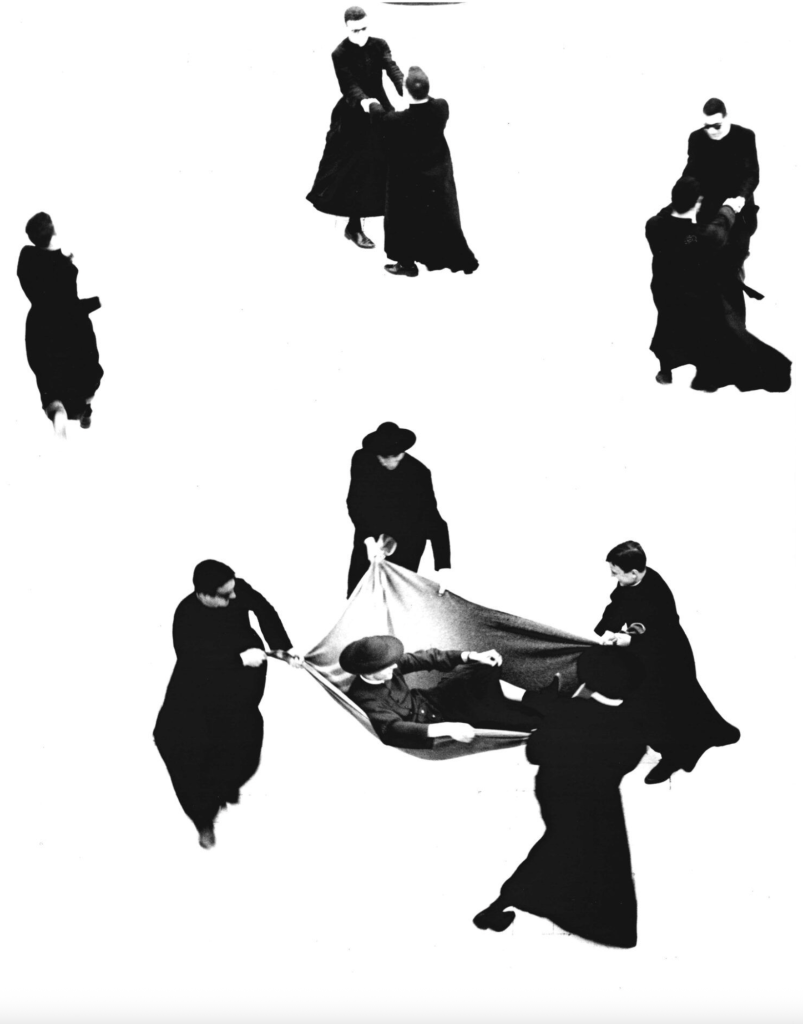
MARIO GIACOMELLI: Red Poppies until April 6 at the GNU – National Gallery of Umbria in Perugia
The National Gallery of Umbria for photography presents a core of never-before-exhibited works by Mario Giacomelli, featuring the Umbrian landscape, all characterized by an almost “pictorial” use of color, which is truly unusual for the artist, known mostly for images that play on strong contrasts of blacks and whites, of fullness and emptiness.
The central core of the exhibition is represented by 5 unpublished small-sized works, taken in the 1960s on the plateau of Colfiorito and Castelluccio di Norcia. In addition, there are about ten abstract works, contemporary to the previous ones, also in color, which document how Giacomelli is able to fully feel like a visual artist, despite using photography as his expressive medium, combining the theme of landscape with that of color in a single pictorial element.
PAOLO DI PAOLO: Rediscovered Photographs at Palazzo Ducale in Genoa until April 6, 2026
On the centenary of the birth of Paolo Di Paolo (1925–2023), Palazzo Ducale di Genova, in collaboration with Marsilio Arte, presents a retrospective dedicated to one of the great masters of Italian photography of the twentieth century. The exhibition PAOLO DI PAOLO. Rediscovered Photographs from October 23, 2025, to April 6, 2026, brings back to the public the forgotten work of an author who managed to tell, with delicacy and depth, the Italy of rebirth in the post-war period.
Over 300 photographs – including many unpublished and for the first time also in color, along with archival materials, period magazines, and original documents – make up a journey that encompasses the entire artistic arc of Di Paolo, from his beginnings in 1953 to his intense activity with the most important publications of the time.
THE ITALY OF THE FIRST ITALIANS: Portrait of a newly born nation at the Castle of Novara until April 6
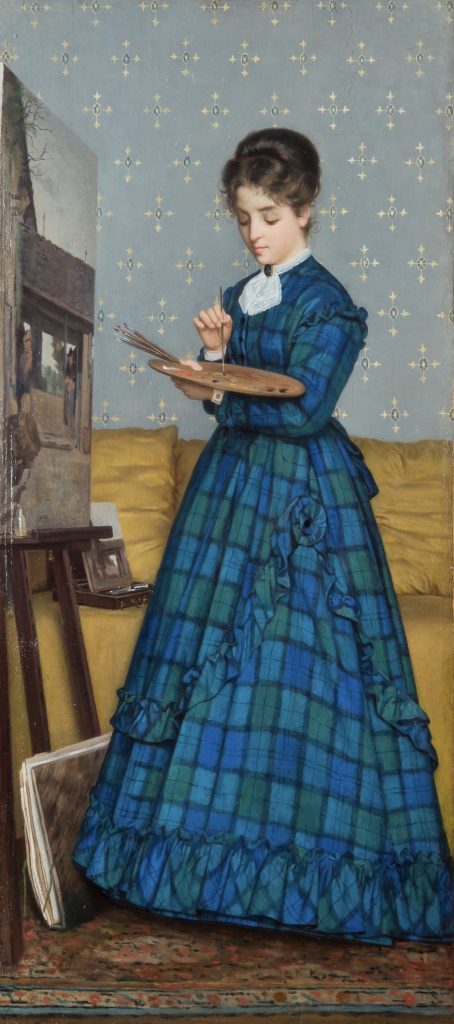
The exhibition The Italy of the First Italians. Portrait of a Newly Born Nation, curated by Elisabetta Chiodini, features a journey of 70 masterpieces created from the early 1860s to the third decade of the twentieth century by some of the major figures of our figurative culture.
The exhibition illustrates our newly born nation, its varied territory, and its population over decades that witnessed profound political, economic, cultural, and social transformations that would slowly lead the country towards modernity.